
Perched just east of downtown, Seattle’s Capitol Hill neighborhood is one of the city’s most energetic and storied urban districts, blending historic homes, green parks, and a nationally known LGBTQ+ and arts scene. It has evolved from a wealthy early-20th-century enclave into a dense, walkable hub of nightlife, activism, and culture that still anchors much of Seattle’s creative identity.
Location and Urban Character
Capitol Hill rises directly uphill from downtown Seattle, bounded by First Hill to the south and the Lake Union valley to the north, which gives the neighborhood its elevated viewpoints and distinct urban edge. Residents enjoy quick access to downtown offices, South Lake Union’s tech hub, and the rest of the city via light rail, buses, bike lanes, and pedestrian-friendly streets.
The Capitol Hill light rail station on Broadway further strengthens connections to the University District, Northgate, and Seattle–Tacoma International Airport, making car-free commuting realistic for many. Broadway and 15th Avenue East form the neighborhood’s traditional commercial spines, lined with cafés, small retailers, and restaurants that make daily life feel almost self-contained.
Much of Capitol Hill is characterized by mid-rise apartment buildings, historic walk-ups, and mixed-use blocks, giving it a dense, urban feel that some locals compare to a “mini New York” within Seattle. For a practical orientation to these main streets, many visitors start with an online neighborhood overview such as this guide, which highlights key corridors, transit options, and cultural touchpoints.
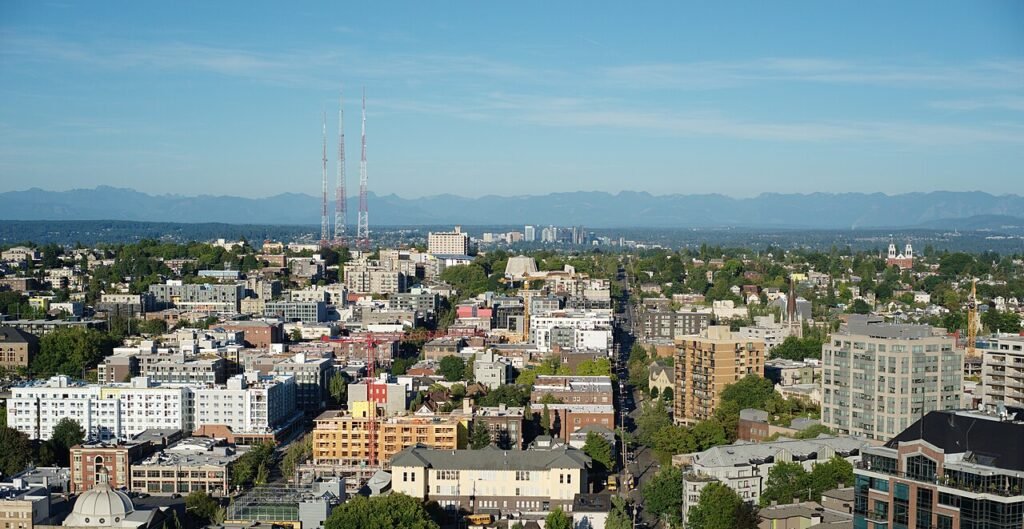 Image credit: Dllu, CC BY-SA 4.0, via Wikimedia Commons

Historical Roots
Before European settlement, the land that became Capitol Hill was part of the traditional territory of the Duwamish people, who lived around the area’s forests, lakes, and waterways. By the late 19th and early 20th centuries, logging and urban expansion transformed the ridge into one of Seattle’s most desirable residential districts, drawing wealthy families who built grand homes along what became known as Millionaire’s Row near Volunteer Park.
The early 1900s also saw the rise of elegant apartment houses and more modest homes, which attracted middle-class residents alongside the elite. Over time, economic shifts and postwar growth led many of the large mansions to be converted into apartments or boarding houses, setting the stage for a more economically and culturally diverse community by the mid-20th century.
LGBTQ+ Hub and Countercultural Identity
From the 1960s onward, Capitol Hill emerged as one of the Pacific Northwest’s most visible LGBTQ+ neighborhoods, as gay, lesbian, bisexual, and transgender residents moved in seeking community and relative safety at a time when other districts were less welcoming. Bars, clubs, and community organizations helped consolidate the area’s identity as Seattle’s “gayborhood,” and LGBTQ+ activism became deeply intertwined with the neighborhood’s political and cultural life.
The counterculture movements of the 1960s and 1970s, followed by punk, grunge, and indie scenes in later decades, reinforced Capitol Hill’s reputation as a home for artists, students, and nonconformists. In 2014, the city designated the Capitol Hill Arts District, formalizing the neighborhood’s role as a concentrated hub of arts organizations, venues, and creative spaces.
Even as demographics have shifted, the area still hosts LGBTQ+-owned businesses, Pride events, and public art that reflect its longstanding role in Seattle’s queer history..
Nightlife, Dining, and Everyday Culture
Capitol Hill is widely known as one of Seattle’s premier nightlife and entertainment districts, with a dense cluster of bars, live music venues, and late-night eateries. The Pike–Pine corridor, stretching roughly between Pike and Pine streets from downtown up the hill, has become a focal point for this energy, mixing historic auto row buildings with renovated warehouses and contemporary mixed-use projects.
Day to day, the neighborhood hums with activity in independent bookstores, coffee shops, record stores, galleries, and small theaters that draw both locals and visitors. Food-focused and culture-forward guides to things to do in Capitol Hill typically highlight brunch spots, craft cocktail bars, local boutiques, and popular venues clustered around Pike, Pine, and Broadway.
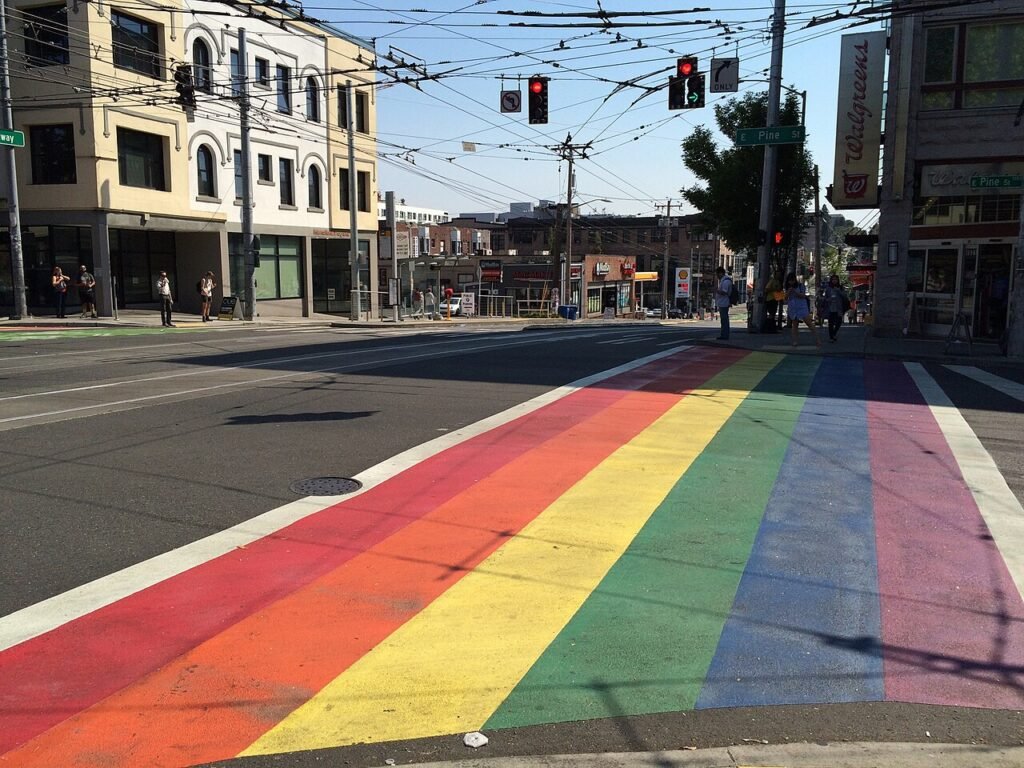 Image credit: Ntowle98, CC BY-SA 4.0, via Wikimedia Commons

Parks, Green Spaces, and Landmarks
Despite its urban density, Capitol Hill offers generous access to green space, with Volunteer Park and Cal Anderson Park serving as key neighborhood anchors. Volunteer Park, a historic Olmsted-designed space, features wooded paths, lawns, the Volunteer Park Conservatory, and the Seattle Asian Art Museum.
The park is often described as the “crown jewel” of the city’s park system, a reputation documented by the local nonprofit Friends of Seattle’s Olmsted Parks on its detailed Volunteer Park history page. Cal Anderson Park, located near the heart of the Pike–Pine corridor and the Capitol Hill light rail station, combines playfields, a reflecting pool, promenade paths, sports courts, and open lawns.
It frequently hosts everything from casual gatherings and pickup games to rallies, vigils, and community festivals, reflecting the neighborhood’s activist streak.
Changing Demographics and Gentrification
As Seattle’s economy has grown, especially with the expansion of the tech sector, Capitol Hill has seen rapid development and rising housing costs, bringing significant change to its social fabric. Between roughly 2010 and the mid-2010s, thousands of new residential units were added in mid-rise and high-rise buildings, many marketed toward higher-income professionals.
Real estate and relocation guides now routinely highlight Capitol Hill’s walkability, transit access, and nightlife as key draws for new arrivals, while noting its premium rents and competitive housing market. These trends have raised concerns about displacement of long-time residents, artists, and small businesses, and about the erosion of the neighborhood’s bohemian and queer character.
At the same time, Capitol Hill still draws a mix of students, young adults, and creative workers, and retains a visible concentration of LGBTQ+ residents, activists, and countercultural communities that continue to shape its identity.
A Neighborhood of Contrasts
Today, Capitol Hill combines historic mansions and landmark districts with sleek new apartments, independent shops with national chains, and quiet side streets with famously busy nightlife corridors. It is at once a residential neighborhood, a regional destination for arts and entertainment, and a center of civic expression where marches, vigils, and celebrations frequently spill into the streets and parks.
For visitors, the neighborhood offers an accessible snapshot of contemporary Seattle: coffee culture, music, progressive politics, and a strong LGBTQ+ presence, all framed by leafy parks and hilltop views. For residents, Capitol Hill remains a place where urban convenience, cultural vibrancy, and ongoing debates about growth, equity, and identity intersect on a daily basis.