
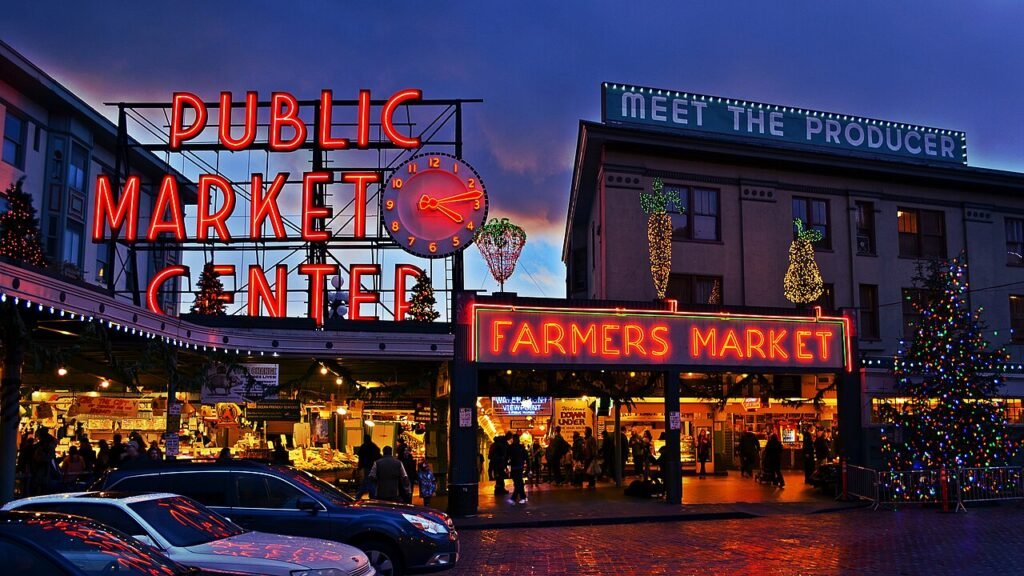
Pike Place Market is one of Seattle’s most recognizable public spaces and a daily part of life for many people who live, work, and study in the city. Its history and design help explain how this place supports community connection and everyday routines in a city where many residents feel stressed, anxious, or overwhelmed.
Origins of Pike Place Market
Pike Place Market began in 1907 as a public response to frustration over high food prices and the treatment of local farmers in Seattle. The Seattle City Council created a public farmers market on Pike Place so farmers could sell directly to residents, lowering costs and making prices more transparent. From the start, the Market worked as a gathering place where everyday people could negotiate essentials face-to-face.
When the market officially opened on August 17, 1907, it quickly drew large crowds of shoppers and onlookers. Within a short time, dozens of farmers appeared daily, and hundreds of thousands of people visited each month, creating a dense, walkable setting in the growing downtown. That mix of movement, noise, and familiar faces still shapes how people experience the market today.
Growth, Diversity, and Community Life
Over the 20th century, Pike Place Market expanded from a line of farm wagons into a network of arcades, stalls, apartments, and services overlooking Elliott Bay. New structures like the Main Arcade and Economy Market increased vendor space, while surrounding buildings formed what some describe as a “vertical” neighborhood stacked across multiple levels. Markets, housing, and social services sit next to each other in a small geographic area, which affects how residents move through and use the district.
Immigrant communities have played a major role in this development. Japanese farmers, for example, began selling produce at the market in the early 1910s and eventually held a large share of stalls despite early efforts to restrict non-citizen vendors. Their presence added agricultural and cultural diversity and reflected broader tensions in Seattle around inclusion, citizenship, and land access that still resonate for residents today.
Preservation, Housing, and Social Services
By the mid-20th century, large-scale urban renewal plans threatened to demolish much of Pike Place Market. Local activists organized to preserve the Market, and city voters eventually approved protections that kept it operating as a public district instead of replacing it with high-rise development. A public authority now oversees preservation and development, balancing historic character with the needs of residents, workers, and visitors.
Today, the Pike Place Market Historic District includes vendor stalls, small shops, low-income housing, and a network of social-service programs. In this compact area, people can access a senior center, food bank, medical care, behavioral health support, childcare, and assisted living alongside day-to-day market activity. These services form a safety net for seniors, workers, families, and neighbors dealing with financial strain, health issues, or housing instability.
Mental and behavioral health supports operate within this network through social work outreach and connections to care. For people living with anxiety, depression, substance use, or chronic stress, having help located in a familiar public setting rather than a distant office can lower barriers to seeking support. This integration matters in a dense downtown where many residents, workers, and students pass through the market as part of their normal routines.
Pike Place Market, Social Connection, and Stress
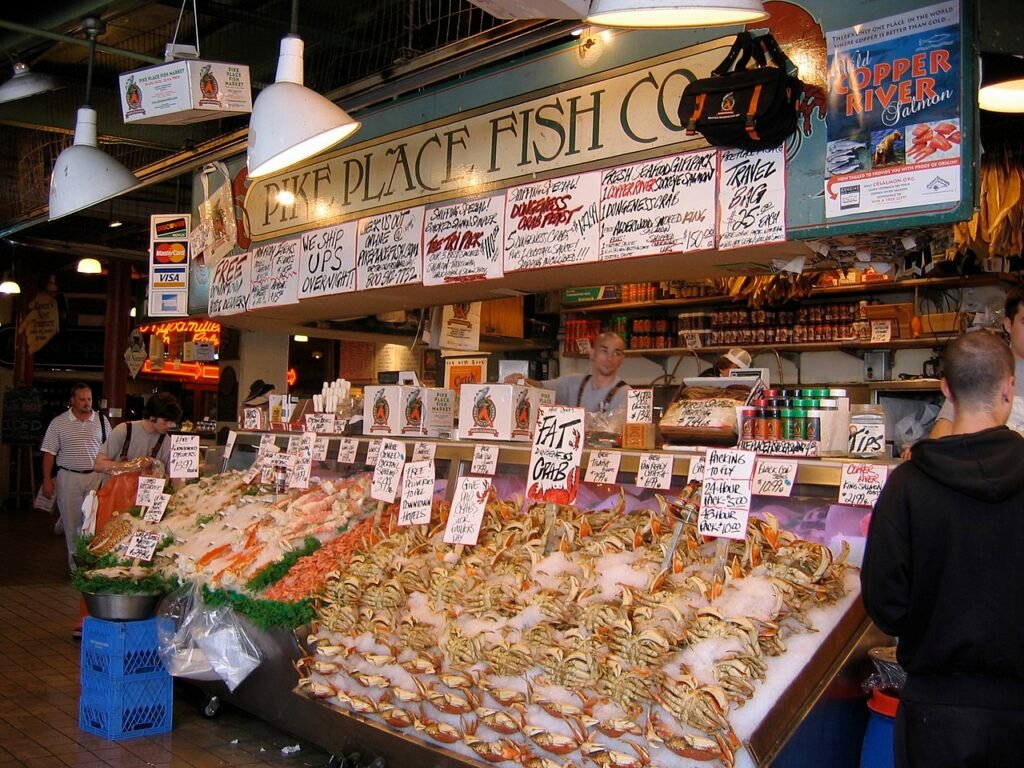
Public markets like Pike Place are social spaces as much as commercial ones. Research on social connection links strong relationships to better mental health and lower risks of depression and anxiety, as noted in the U.S. Surgeon General’s advisory on loneliness and isolation. The Market’s walkable design and tight layout create many chances for brief interactions, from conversations with vendors to shared reactions to street performers.
The Pike Market Senior Center and Food Bank show how this environment supports people who might otherwise be isolated. The organization provides free meals, groceries, activities, and social work services that help older adults and others secure housing, medical care, and income supports. This approach reflects concerns highlighted by the National Academies about health risks linked to social isolation among older adults in their work on social isolation in older adults.
For working professionals using downtown transit, students cutting through between classes, or families visiting on weekends, the Market can play a quieter role. Walking familiar routes, watching the waterfront, or observing the flow of people can provide small mental breaks from screens and responsibilities. For some people already feeling overwhelmed, however, the same crowds and noise may increase tension, so choosing less busy times or quieter corners of the district can be important for managing stress.
Seattle’s Climate and Market Routines
Seattle’s marine west coast climate brings cool, wet winters and mild, relatively dry summers, with frequent cloud cover and regular rainfall for much of the year. These conditions shape how people use Pike Place Market: covered arcades and indoor areas provide shelter during rainy months, while outdoor terraces and waterfront views become more appealing in summer. For residents who notice seasonal dips in mood, the market can offer a way to move around, see daylight, and be near other people without fully exposing themselves to the weather.
Seasonal changes also show up in what vendors offer, from spring greens to summer berries and fall root vegetables. Observing these shifts connects city life to regional agriculture and gives many residents, couples, and families a sense of rhythm across the year. For people working through burnout or long-term stress, simple rituals like visiting a favorite stall each season can become grounding habits that link personal routines to the broader cycles of Seattle’s environment.
